
MetaMate AI Discrimination: Know Your Legal Rights

Artificial Intelligence conversations are not confidential.

When AI Fires You: Algorithmic Discrimination and the Law

In Brief: AI systems are now making—or heavily influencing—hiring, performance, and termination decisions across U.S. workplaces. Workers on medical, parental, or disability leave are disproportionately harmed when automated scoring tools penalize legitimate absences. Federal and state laws still apply, and recent court rulings signal growing judicial scrutiny of algorithmic employment decisions.

In July 2026, 26 workers filed an anonymous lawsuit against Meta. Their allegation: that AI-powered productivity tools scored their performance while they were on approved medical, parental, or disability leave—then used those lowered scores to select them for termination in a mass layoff affecting nearly 8,000 employees.

This is widely reported as the first lawsuit against a major U.S. tech company to directly challenge AI-driven layoff decisions. It almost certainly will not be the last.

AI systems now influence every stage of the employment lifecycle—screening candidates before a human ever sees a résumé, monitoring keystrokes and browser activity, scoring performance, and flagging workers for layoffs. The technology moves fast. Legal accountability is catching up. And for workers in protected categories, the stakes could not be higher.

This post explains how algorithmic discrimination harms protected workers, what laws apply, how AI is reshaping pay equity, and what you can do if an automated system has affected your job.

How AI Has Taken Over Workplace Decision-Making

AI is no longer just a recruiting filter. Companies now deploy it across the entire employment relationship—from the moment a candidate submits an application to the moment a worker is selected for termination.

The systems at the center of the Meta lawsuit illustrate how far this has gone. According to the complaint, Meta used MetaMate, an internal large-language-model assistant, alongside an employee-trained “second brain” that tracked communications and documents, and a productivity-scoring tool that drew data from keystrokes, screen activity, browser history, messaging, and email. Meta has maintained that human managers made workforce decisions using neutral criteria—job level, historical performance ratings, and tenure—not AI, and not protected characteristics.

That defense highlights the central problem. When human decisions rely on data generated by automated systems, the line between algorithmic output and human judgment becomes difficult to locate—and nearly impossible for workers to challenge.

The scale of AI deployment is significant. According to a MyPerfectResume report, 73% of employers now use AI in hiring decisions, with half reporting that their tools automatically reject up to 50% of applications before any human review. More than 80% of U.S. employers, and virtually all Fortune 500 companies, currently use some form of AI screening in their hiring process.

Why Workers on Protected Leave Are Disproportionately at Risk

Many AI productivity and performance tools measure output continuously—without accounting for legitimate interruptions like medical leave, disability accommodations, pregnancy, or family caregiving. The result is a structural disadvantage built into the system itself, not necessarily into anyone’s intent.

In the Meta case, plaintiffs allege their AI-adoption metrics and productivity scores declined while they were lawfully away from work. Those lower scores, they contend, fed directly into the termination selection process. An algorithm that treats a worker on approved FMLA leave identically to one who is actively working will systematically penalize people with serious health conditions, disabilities, or pregnancy-related absences. The discrimination is encoded in the design.

This dynamic extends beyond layoffs. AI-driven systems increasingly personalize compensation—setting pay rates and bonus thresholds based on granular behavioral and performance data. When workers in protected categories generate less trackable “output” for legitimate reasons, their algorithmic scores—and corresponding pay—can fall accordingly. Two employees doing the same job at the same company may earn meaningfully different wages based entirely on AI-generated performance data, with no single discriminatory decision ever made.

The pattern is visible in industries far from Silicon Valley. Delivery and gig workers whose earnings are dictated by automated scorecards face situations where a minor metric decline—attributable to illness, injury, or a medical appointment—can eliminate bonus eligibility without any human review of the underlying cause.

Stanford University research reinforces the concern. A study following 3.4 million people submitting 4 million job applications across 1,700 positions found that an AI hiring tool can pass a standard bias audit at the aggregate level while still systematically screening out Black applicants and Asian applicants for specific roles. Applying the EEOC’s standard adverse impact threshold, the study found 26% of Black applicants and 15% of Asian applicants were affected in ways a standard audit would not have flagged.

What the Law Says—and Where Enforcement Falls Short

Existing federal and state laws apply to algorithmic employment decisions. The challenge is proving a violation when the algorithm itself is a proprietary trade secret.

Key legal protections include:

  • Americans with Disabilities Act (ADA): Prohibits discrimination against qualified individuals with disabilities in hiring, firing, and compensation, and requires employers to provide reasonable accommodations.
  • Family and Medical Leave Act (FMLA): Protects employees on approved leave from adverse employment actions, including termination.
  • Title VII / Pregnancy Discrimination Act / Pregnant Workers Fairness Act: Prohibits discrimination based on sex, pregnancy, and related medical conditions.
  • California FEHA: Provides broader state protections against disability and pregnancy discrimination, requiring employers to explore all reasonable accommodations before making an adverse employment decision.

Courts are beginning to take these claims seriously in the AI context. In Mobley v. Workday, a federal judge allowed discrimination claims to proceed under the ADA, California law, and federal anti-discrimination statutes. The plaintiff, Derek Mobley—a Black man over 40 with a disability—alleged he was rejected from more than 100 positions at companies using Workday’s AI screening platform, often within minutes of applying. Court filings show that approximately 1.1 billion applications were rejected using Workday’s tools during the relevant period. Workday denied wrongdoing, stating that its technology “looks only at job qualifications, not protected traits.”

In the Meta litigation, U.S. District Judge William Orrick declined to block the layoffs while acknowledging “serious questions going to the merits,” and separately required Meta to explain specifically why four visa-holding plaintiffs were selected—signaling that documentation of human decision-making carries real weight in court.

The EEOC has been direct on employer liability: employers are responsible for AI bias in tools supplied by third-party vendors. Delegating screening to an outside platform does not transfer legal exposure.

Colorado’s AI Act, effective June 2026, requires employers deploying high-risk AI systems to take reasonable care to protect consumers from algorithmic discrimination. California and New York City have enacted laws requiring bias testing of AI hiring tools. Compliance, however, remains inconsistent—and enforcement has not kept pace with deployment.

AI and Pay Discrimination: The Hidden Wage Gap

Algorithmic discrimination does not stop at who gets hired or fired. AI systems now personalize compensation in ways that can compound existing gender and racial wage gaps without generating any obvious paper trail.

Rather than applying a uniform wage, some AI compensation models calculate individualized pay offers based on behavioral indicators, location, work history, and projected acceptance rates. Workers who have taken protected leave, are managing disabilities, or have caregiving responsibilities may generate less trackable productivity data—and receive lower AI-generated compensation scores as a result.

What Workers Can Do Right Now

If you believe an AI system has influenced an adverse employment action against you, your response in the days and weeks that follow matters significantly.

Document everything. Keep records of approved leave, performance reviews, changes in productivity scores, and any communications about your role or compensation. Patterns matter in algorithmic discrimination claims—and courts have demonstrated they are willing to scrutinize them.

Know your rights. Employers are generally required to pause automated monitoring during approved leave or adjust scores to account for it. Failure to do so may constitute discrimination under the ADA, FMLA, Title VII, or applicable state law.

Demand transparency. In California and New York City, AI hiring tools are subject to bias-testing requirements that workers can invoke. You have a right to understand how decisions affecting your employment are being made.

Act quickly. Employment discrimination claims are subject to strict filing deadlines. Delaying consultation with an attorney can limit your legal options, sometimes significantly.

The Law Is Catching Up—But Workers Must Act

AI does not eliminate workplace discrimination. It can systematize it at scale, quietly and without obvious fingerprints. The Meta and Workday cases mark a turning point: courts are now scrutinizing AI-assisted employment decisions, and the legal frameworks workers need already exist.

What is required is workers who understand their rights, document their circumstances, and move before deadlines close.

If you were terminated, had your pay reduced, or experienced any adverse employment action that you believe was influenced by an AI system—and you were on medical leave, are pregnant, have a disability, or belong to any protected class—you may have a legal claim. Contact Helmer Friedman LLP for a confidential consultation.


Frequently Asked Questions

Can I sue my employer for using AI to fire me?
Yes, in certain circumstances. If an AI-assisted termination decision disadvantaged you because of a protected characteristic—such as disability, pregnancy, race, age, or sex—existing federal and state anti-discrimination laws may apply. Recent lawsuits against Meta and Workday have established that courts are willing to allow these claims to proceed. An employment attorney can help evaluate whether the specific facts of your situation support a viable legal claim.

Is AI-based pay discrimination illegal?
It can be. The Equal Pay Act, Title VII, and California’s Equal Pay Act prohibit pay disparities based on sex, race, and ethnicity. When AI compensation tools systematically assign lower pay to workers in protected categories—for example, those who have taken medical or parental leave—those disparities may constitute unlawful discrimination, even if no individual decision-maker intended to discriminate.

Are employers liable for AI discrimination if the tool came from a third-party vendor?
Yes. The EEOC has stated clearly that employers are responsible for vetting AI tools used in their hiring and employment processes, even when those tools are supplied by a third party. The Workday case also established a legal framework under which the vendor itself may face liability—but that does not eliminate the employer’s exposure.

What evidence do I need to challenge an AI-driven employment decision?
Documentation is critical. Records of approved leave, performance reviews, changes in scores or compensation, and any communications about your role or termination can help establish a pattern. Courts have shown they are willing to scrutinize algorithmic decision-making when workers can demonstrate a correlation between protected activity—such as taking FMLA leave—and adverse employment outcomes.

What is the deadline for filing an employment discrimination claim?
Filing deadlines vary depending on the type of claim and jurisdiction. Federal discrimination claims generally require filing a charge with the EEOC within 180 to 300 days of the discriminatory act. State law deadlines may differ. Acting promptly is essential—delaying consultation with an attorney can limit your options.

Wrongful Termination in the Creator Economy: MrBeast Lawsuit

Employment Laws apply to influencers, youtubers, content creators.

Wrongful Termination in the Creator Economy: The MrBeast Lawsuit

The public image of Jimmy Donaldson, universally known as YouTube megastar MrBeast, is built on staggering philanthropy, high-energy challenges, and a seemingly boundless desire to give away money. To his hundreds of millions of subscribers, Donaldson represents a bright, modern iteration of the American Dream. However, a federal lawsuit filed by former executive Lorrayne Mavromatis paints a starkly different picture of the operations at MrBeastYouTube LLC and GameChanger 24/7 LLC. Behind the polished thumbnails and viral videos, the lawsuit alleges a dark, misogynistic workplace rampant with illegal behavior.

As the “creator economy” rapidly expands into a multi-billion-dollar industry, workers must understand that modern entertainment companies are not exempt from strict federal employment laws. The legal boundaries defining a hostile work environment and wrongful termination apply just as forcefully to tech-savvy media startups as they do to traditional corporate offices.

This post unpacks the specific allegations of wrongful termination, sexual harassment, and labor violations brought against MrBeast’s empire. We will examine the company’s aggressive defense strategy and explore the broader implications for employee rights in high-intensity, influencer-driven cultures.

Behind the Camera: Allegations of a Hostile Work Environment

At the core of Mavromatis’s lawsuit is the description of a pervasive “boys’ club” atmosphere at Beast Industries. While Donaldson served as the public face, the internal culture allegedly suffered from a severe lack of basic employment protections. The complaint outlines deeply troubling claims of sexual harassment and gender discrimination directed at female staff members.

According to the federal filing, former CEO James Warren routinely insisted that Mavromatis meet him for one-on-one meetings at his home rather than the corporate office. During these dimly lit encounters, Warren allegedly made inappropriate comments about how she looked in her clothes. The hostility extended beyond isolated incidents. When Mavromatis complained that a billionaire client was making unwanted advances toward her, leadership allegedly dismissed the encounter entirely, telling her she should be “honored” that the client was hitting on her.

The lawsuit also points to a broader culture of gender discrimination. Mavromatis claims she was repeatedly treated differently than her male counterparts. During a staff meeting, a male colleague allegedly told her to “shut up” and “stop talking” in front of the very employees she supervised. Furthermore, male executives allegedly laughed and made demeaning jokes at the office regarding female contestants on the upcoming Beast Games reality show, specifically mocking their complaints about lacking access to feminine hygiene products and clean underwear.

Pregnancy discrimination lawyers - protecting pregnant employees from discrimination.

Retaliation for Speaking Up

A healthy corporate environment encourages employees to report misconduct. At MrBeast’s production companies, speaking up allegedly derailed careers. Mavromatis, who was initially hired as Head of Instagram and promoted twice within her first year, attempted to report the severe workplace toxicity. She took her grievances directly to the head of Human Resources. Notably, this HR director was Susan Parisher, Jimmy Donaldson’s mother.

Instead of a fair investigation and protection from further harassment, Mavromatis faced alleged workplace retaliation. She claims she was promptly transferred and demoted to an obscure division within the company. According to the lawsuit, this division was internally known as the place where “careers go to die.” This aggressive sidelining serves as a textbook example of illegal workplace retaliation, wherein an employer punishes an employee for engaging in legally protected activities, such as reporting sexual harassment.

FMLA Violations and Pregnancy Discrimination

Perhaps the most severe allegations in the complaint surround pregnancy discrimination and blatant violations of the Family and Medical Leave Act (FMLA). Federal law mandates that eligible employees receive protected time off for the birth of a child, free from employer interference.

Mavromatis alleges that the company had no coherent parental leave policy and failed to inform her of her FMLA rights. Worse, she claims she was expected to continue working throughout her parental leave. This allegedly included checking Slack messages and joining team meetings from her hospital bed while in labor. Highlighting the grueling reality of this expectation, Mavromatis provided an emotive, direct quotation regarding her labor experience: “I was still bleeding, and I just had to show up.”

The situation culminated shortly after her leave ended. Less than three weeks after returning to work, Mavromatis was fired. According to the complaint, leadership justified the termination by telling her she was “too high caliber” for the obscure role she had been demoted into just months prior.

The Corporate Defense: “Clout-Chasing” or Deflection?

The response from MrBeast’s corporate spokespeople has been swift and combative. In a public statement, a company representative aggressively denied the allegations, labeling the lawsuit a “clout-chasing complaint” built entirely on “deliberate misrepresentations” and “categorically false statements.”

The company’s defense asserts that Mavromatis did not experience wrongful termination. Instead, they claim that a new manager reorganized the department while she was on leave, resulting in the elimination of several roles held by both men and women. They also deny the claims of retaliation and harassment, stating they possess extensive evidence—including Slack messages and witness testimony—that refutes her narrative.

However, this fierce public defense sits in sharp contrast with the company’s documented internal messaging. The lawsuit references a 36-page company handbook, sometimes referred to as “The Beast Bible,” which reportedly outlines the expectations for success at the production company. The guide allegedly contains highly unprofessional directives, including statements like “It’s okay for the boys to be childish,” and instructs employees that “if talent wants to draw a dick on the white board in the video or do something stupid, let them.” Another section allegedly dictates that “The amount of hours you work is irrelevant,” heavily implying that relentless labor is prioritized over employee welfare and federal labor compliance.

The Broader Impact on Influencer Culture and Worker Protections

This high-profile legal battle carries massive implications for the broader entertainment and influencer industry. Digital media companies frequently operate with a startup mentality, prioritizing rapid growth, viral success, and unconventional management styles. But a casual dress code and a modern office do not override the law.

No matter how unconventional a workplace seems, federal protections against discrimination and retaliation remain absolute. Employers cannot legally demand that staff work from a delivery room, nor can they demote rising stars for reporting harassment. Abusive workplaces thrive when victims remain silent. Taking decisive legal action is a vital step in holding powerful entities—even beloved internet celebrities—accountable for their corporate practices.

Seek Justice: Your Advocate in the Workplace

The lawsuit against MrBeast’s production companies is currently unfolding, and the truth of these severe allegations will ultimately be tested in federal court. What remains clear is that navigating a toxic work environment is a profoundly isolating experience, especially when facing a wealthy and powerful employer.

If you are facing similar workplace abuses, you do not have to fight these battles alone. Helmer Friedman LLP is your trusted legal partner, offering expert, personalized advocacy for victims of discrimination, harassment, and retaliation. With over 20 years of proven legal expertise and a track record of securing over $50 million in settlements, our team knows how to hold corporations accountable.

Take the first step toward justice. Contact Helmer Friedman LLP today for a free, strictly confidential consultation to discuss your specific legal needs and ensure your rights are protected.

Wrongful Termination at Hilton: EEOC Sues Over Discrimination

Large hand removing little guy, representing Religious discrimination, failure to accommodate, Disability discrimination, Age discrimination wrongful termination.

Front Desk to Defendant: Inside the Hilton Wrongful Termination Case

Imagine showing up to work every day, doing your job diligently, and then being fired simply for asking for a chair to sit on while pregnant. Or, picture being a pastor who requests a schedule change to lead Sunday service, only to have your hours slashed in retaliation.

These aren’t hypothetical scenarios. They are the allegations at the center of a federal lawsuit filed by the U.S. Equal Employment Opportunity Commission (EEOC) against Hotel Equities Group, LLC, regarding their management of a Hilton-branded hotel in Oak Lawn, Illinois. The suit charges the company with violating federal law by failing to provide reasonable accommodations and subsequently retaliating against the employees who requested them.

For employees navigating the complex world of workplace rights, this case serves as a stark reminder of the legal protections that exist—and the consequences employers face when they ignore them.

The EEOC Takes Action Against Hotel Equities Group

“Employees have a right to request and receive religious and pregnancy-related accommodations in the workplace without fear of retaliation. When employers deny lawful accommodations and retaliate against workers for speaking up, the EEOC will take action.” Catherine Eschbach, acting EEOC General Counsel

In a press release dated February 4, 2026, the EEOC announced it had filed a lawsuit against Hotel Equities Group, LLC. This company, which provides management and consulting services for hotels across the United States, is accused of violating federal law by failing to provide pregnancy and religious accommodations to two separate employees.

The lawsuit (EEOC v. Hotel Equities Group, LLC, Case No. 1:26-cv-01217) was filed in the U.S. District Court for the Northern District of Illinois. It represents a significant move by the federal agency to enforce the Pregnant Workers Fairness Act (PWFA) and Title VII of the Civil Rights Act of 1964.

A Closer Look at the Allegations

The details of the lawsuit paint a troubling picture of management practices at the Oak Lawn hotel. The EEOC’s complaint outlines two distinct instances of alleged discrimination and retaliation occurring in 2023.

The Pregnancy Accommodation Request

The first incident involved a pregnant front desk clerk who requested a simple accommodation: the ability to sit while working due to medical needs related to her pregnancy.

According to the lawsuit, a coworker initially provided her with a suitable chair. However, management intervened, removing the chair and replacing it with a small, backless stool while discouraging her from using it. Shortly after this incident, the employee was discharged. The EEOC alleges that this termination was a direct act of retaliation for her request for accommodation.

The Religious Accommodation Request

In the same year, another front desk clerk—who also served as an assistant pastor at a Baptist church—requested a schedule adjustment. He asked not to be scheduled for Saturday overnight shifts, as they interfered with his ability to attend and lead Sunday morning services.

While the company verbally approved his request, its actions told a different story. The lawsuit claims that management continued to schedule him for Saturday nights, even after he objected. When he persisted in his objection, the company allegedly retaliated by cutting his hours, effectively penalizing him for exercising his religious rights.

The Legal Framework Protecting Employees

These incidents highlight critical protections under federal law that every employee should understand.

The Pregnant Workers Fairness Act (PWFA)

The PWFA requires employers to provide reasonable accommodations to qualified employees with known limitations related to pregnancy, childbirth, or related medical conditions. Unless the accommodation would cause an “undue hardship” for the employer, the employer is legally obligated to provide it. In the Hilton case, providing a chair for a front desk clerk is a classic example of a reasonable accommodation that allows an employee to continue working safely.

Title VII of the Civil Rights Act of 1964

Title VII is a landmark statute that prohibits employment discrimination based on race, color, religion, sex, and national origin. Specifically regarding religion, employers must reasonably accommodate an employee’s religious beliefs or practices, unless doing so imposes an undue hardship on the business. Scheduling changes for religious observances, like the Sunday services mentioned in the lawsuit, generally fall under this protection.

Both statutes strictly prohibit retaliation. This means an employer cannot fire, demote, cut hours, or harass an employee simply because they requested an accommodation or complained about discrimination.

Your Rights: Accommodations Without Retaliation

It is crucial for workers to know that requesting an accommodation is a protected activity. Whether you need a modification to your duties due to a disability or pregnancy, or a schedule change for religious observance, you have the right to ask.

If an employer responds to your request with hostility, creates a hostile work environment, reduces your hours, or terminates your employment, they may be breaking the law. As demonstrated by the EEOC’s stance in the Hotel Equities case, federal agencies are actively seeking to hold non-compliant employers accountable.

Recognizing Wrongful Termination Beyond This Case

While the Hilton case focuses on pregnancy and religious discrimination, wrongful termination can occur in many other contexts. In California, state and federal laws provide robust shields against illegal firing.

“Employees have a right to request and receive religious and pregnancy-related accommodations in the workplace without fear of retaliation,” said Catherine Eschbach, acting EEOC General Counsel. “When employers deny lawful accommodations and retaliate against workers for speaking up, the EEOC will take action.”

What Qualifies as Wrongful Termination?

Wrongful termination occurs when an employee is fired for an illegal reason or in violation of public policy. Even “at-will” employees—those who can be fired at any time for any reason—cannot be fired for illegal reasons.

Common examples of wrongful termination include:

  • Discrimination: Firing someone based on race, gender, age (over 40), disability, sexual orientation, or gender identity.
  • Whistleblowing: Terminating an employee for reporting illegal activities or unsafe working conditions. California Labor Code § 1102.5 explicitly protects whistleblowers.
  • Retaliation: Firing an employee for filing a workers’ compensation claim, complaining about unpaid wages, requesting reasonable accommodations during pregnancy or for religious reasons, or reporting harassment.
  • Taking Protected Leave: Dismissing an employee for taking leave under the Family and Medical Leave Act (FMLA) or the California Family Rights Act (CFRA).

Empowering Action Against Injustice

The recent allegations involving Hotel Equities Group underscore the critical need for robust legal protections for workers. Every employee deserves a safe environment where they never have to compromise their health, beliefs, or income.

If you feel you’ve been wrongly dismissed or are facing retaliation for seeking necessary accommodations, remember that you’re not alone in this journey. It’s vital to meticulously document your experiences—keeping records of emails, performance reviews, and timelines. To protect your interests, avoid relying on AI tools for legal research as these discussions might not remain confidential. Instead, connect with a trusted legal expert.

At Helmer Friedman LLP, we proudly bring over 20 years of dedicated experience fighting for employees’ rights. We offer confidential consultations designed to empower you with knowledge about your rights and guide you on the best next steps. Justice is more than just a concept; it’s a fundamental right that’s absolutely worth standing up for! Together, we can strive for a better and fairer workplace for everyone.

Recognizing and Addressing Discrimination in the Workplace

Combating workplace discrimination - Helmer Friedman LLP.

Discrimination at work is not just a legal issue; it’s a human one that affects morale, productivity, and the overall health of an organization. From racial slurs to unequal pay, discrimination can manifest in various harmful ways. Understanding how to recognize and address it is crucial for creating a safe and inclusive working environment. This article will guide you through the signs of workplace discrimination, recent real-life examples, and actionable steps for addressing these critical issues.

Signs of Discrimination in the Workplace

Discrimination can be subtle or overt. Signs may include exclusion from meetings or projects, lack of promotion despite qualifications, unfair performance reviews, or derogatory comments about race, gender, age, or disability. Recognizing these signs is the first step toward creating a fair workplace.

Recent Examples of Workplace Discrimination

Race Discrimination

In a troubling case recently reported, a Insurance Auto Auctions, Inc. yard attendant in Fremont, California, was subjected to racial slurs, including the “n-word,” up to 15 times a day. This verbal harassment happened openly in front of the general manager, who failed to act, leaving the Black employee feeling he had no choice but to resign. This example starkly highlights how unchecked discrimination can permeate an organization. (Case No. 4:24-cv-06848)

“Let me be clear: there is no workplace, regardless of locale, where the use of racial slurs is acceptable,” said EEOC San Francisco District Director Nancy Sienko. “Once an employer lets that standard slip, not only are you giving permission for an unprofessional, unproductive and hateful work environment, you are violating the law.”

Disability Discrimination

A company driver at Mail Hauler Trucking, LLC. in South Dakota was dismissed due to his physical impairment despite successfully performing his job duties. His unusual gait—a result of his condition—led to his unjust termination, demonstrating a blatant disregard for the legal protections afforded to individuals with disabilities. (Civil Action No. 1:24-cv-01020-ECS)

“The ADA prohibits employers from terminating employees because of their disability or discriminating against employees because of misperceptions that they cannot perform the job because of a disability,” said Gregory Gochanour, regional attorney of the EEOC’s Chicago office.

Sexual Harassment

At a Long Island car dealership, Garden City Jeep Chrysler Dodge, LLC and VIP Auto Group of Long Island, Inc., female employees endured inappropriate touching and sexual comments from an inventory manager. Despite complaints to management and HR, the harassment continued unchecked, forcing some employees to quit. This case underscores the critical need for effective interventions and accountability at every level of management. (Case No. 2:24-cv-06878)

“Whether a restaurant, car dealership or other business, no employer should ignore sexual harassment, let alone condone or encourage it,” said Kimberly Cruz, regional attorney for the EEOC’s New York District Office.

Pregnancy Discrimination

At Castle Hills Master Association Inc., and parent companies Bright Realty LLC, Bright Industries LLC, and Bright Executive Services LLC, a pregnant employee diagnosed with placenta previa, a high-risk condition, was terminated while hospitalized despite notifying her employer of her need for medical leave. The Castle Hills Master Association and property management companies involved refused to accommodate her, highlighting a distressing gap in understanding pregnancy-related employment rights. (Civil Action No. 4:24-cv-00871)

Pay Discrimination

AccentCare in Pennsylvania was sued for paying female Licensed Practical Nurses less than their male counterparts for equal work despite the women’s superior qualifications. After a female LPN complained, she was fired, showcasing retaliatory practices that exacerbate gender-based pay disparities. (Case No. 3:24-cv-01646-RDM)

“Employers cannot pay female employees less than their male colleagues because of sex,” said Debra Lawrence, the EEOC’s Regional Attorney in Philadelphia. “Retaliating against an employee who raises these concerns and seeks to correct the disparity further exacerbates the legal violation.”

Legal Rights and Responsibilities in Addressing Discrimination

Employees have the right to a workplace free of discrimination. The law provides several avenues to address discrimination, including filing complaints with the Equal Employment Opportunity Commission (EEOC) and hiring. Employers are legally required to investigate allegations and take corrective action when necessary.

Steps to Take if You Witness or Experience Discrimination

  1. Document the Incident:
  • Record dates, times, locations, and details of the discriminatory behavior.
  1. Report the Incident:
  • Use your company’s reporting mechanism or approach your HR department directly.
  1. Seek Support:
  • Contact a trusted colleague, mentor, or employee resource group for guidance and support.
  1. Consider Legal Action:

The Role of HR and Management in Preventing and Addressing Discrimination

HR and management play a pivotal role in fostering an inclusive environment. They must act swiftly on complaints, ensure policies are enforced, and model respectful behavior. Regular training sessions and open dialogues can also help reinforce the company’s commitment to a productive and inclusive workplace.

Employers seeking to ensure compliance with discrimination laws can benefit significantly from consulting experienced employment discrimination lawyers. These legal professionals offer valuable guidance on navigating complex regulations, thereby assisting in the proactive prevention of discriminatory practices in the workplace. By working closely with a lawyer, employers can gain insights into potential vulnerabilities within their current policies and procedures and receive tailored advice to foster a legally compliant and respectful work environment. This proactive approach not only aids in legal compliance but also strengthens the organization’s commitment to equality and fairness.

Creating an Inclusive Workplace Culture

An inclusive culture celebrates diversity and fosters a sense of belonging. Encourage conversations about diversity, recognize cultural differences, and celebrate various backgrounds. Understandably, employers might hesitate to engage in difficult conversations about diversity, inclusion, and compliance, fearing it could open Pandora’s box of unforeseen challenges. However, addressing these topics head-on is crucial for fostering a workplace where all employees feel valued and heard. Avoiding these conversations can perpetuate systemic issues and hinder the organization’s growth and morale. By embracing these discussions, leaders can uncover valuable insights into the employees’ perspectives, identify areas for improvement, and initiate meaningful change. It’s essential to approach these dialogues with an open mind, active listening skills, and a commitment to genuine, positive transformation. While challenging, these conversations ultimately nurture a more cohesive, productive, and respectful workplace culture. Leadership should exemplify these values, ensuring they trickle down throughout the organization.

The Ongoing Effort to Eliminate Discrimination

Eliminating discrimination requires persistent effort and commitment from everyone within an organization. By recognizing the signs, understanding your rights, and taking actionable steps, you can contribute to a healthier, more inclusive workplace. Start today by reviewing your organization’s policies and fostering open discussions about diversity and inclusion. Together, we can create a work environment where everyone is respected and valued.

Pita Pit Pregnancy Discrimination, Wrongful Termination Lawsuit

Pregnancy discrimination accommodations.

Pita Pit Faces Pregnancy Discrimination Lawsuit

QSR Pita USA Inc., the franchisee behind Pita Pit restaurants, is defending itself against serious allegations of pregnancy discrimination after allegedly firing an employee who requested to work from home due to pregnancy-related nausea. The lawsuit, which targets the company and its affiliates, highlights ongoing workplace challenges faced by pregnant employees nationwide.

The case centers on allegations that management called the employee’s pregnancy a “distraction” before terminating her employment. This incident raises critical questions about employer obligations under federal law and the rights of pregnant workers seeking reasonable accommodations.

Understanding Federal Pregnancy Discrimination Laws

Three key federal laws protect pregnant workers from discrimination and ensure access to necessary accommodations.

Title VII of the Civil Rights Act of 1964

Title VII, amended by the Pregnancy Discrimination Act, prohibits sex discrimination, including pregnancy-based discrimination. Under this law, employers cannot make employment decisions based on:

  • Current pregnancy
  • Past pregnancy history
  • Potential for future pregnancy
  • Medical conditions related to pregnancy or childbirth
  • Breastfeeding or lactation needs

The law requires employers to treat pregnant employees the same as other temporarily disabled workers. This means if accommodations are provided for other medical conditions, similar considerations must be extended to pregnancy-related limitations.

The Americans with Disabilities Act (ADA)

While pregnancy itself is not classified as a disability under the ADA, pregnancy-related conditions often qualify for ADA protections. These conditions may include:

  • Severe morning sickness
  • Gestational diabetes
  • Pregnancy-related high blood pressure
  • Other complications requiring medical intervention

When pregnancy-related conditions constitute a disability, employers must engage in the interactive process to identify reasonable accommodations that allow the employee to perform essential job functions.

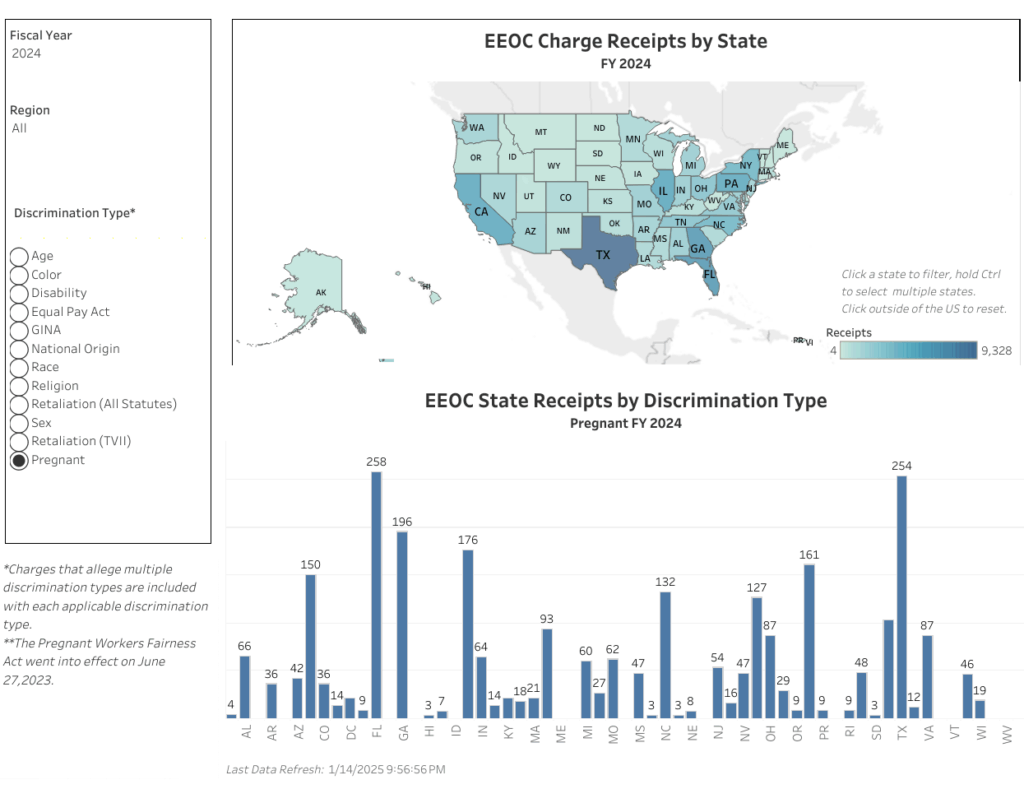
Pregnancy discrimination reports in 2024 by state.

The Pregnant Workers Fairness Act (PWFA)

Enacted in 2023, the PWFA specifically addresses accommodation requests for pregnancy-related limitations. The law requires employers to provide reasonable accommodations unless doing so would cause undue hardship. Significantly, the PWFA prohibits forcing employees onto leave when other feasible accommodations exist.

Details of the Pita Pit Lawsuit

The lawsuit against QSR Pita USA Inc. presents a troubling narrative of alleged pregnancy discrimination that violates multiple federal protections.

The Employee’s Experience

According to court documents, the employee had previously worked from home successfully without receiving negative performance feedback. When pregnancy-related nausea began affecting her ability to work in the office, she requested a reasonable accommodation to continue working remotely.

The request was reportedly denied, and management allegedly characterized her pregnancy as a “distraction.” This language demonstrates the type of stigmatizing attitude that federal laws specifically prohibit.

Legal Violations Alleged

The lawsuit claims violations of both Title VII and the ADA. The allegations suggest that:

  • The employer failed to engage in good faith discussions about accommodations
  • Management used discriminatory language regarding the employee’s pregnancy
  • The termination was based on pregnancy-related limitations rather than job performance
  • The company did not treat the employee’s situation consistently with other accommodation requests

Corporate Liability

The lawsuit names not only QSR Pita USA Inc. but also its shareholders and successor company, BubbaMax LLC. This comprehensive approach signals that corporate restructuring cannot shield employers from liability for discriminatory practices.

Legal Implications for Employers

The Pita Pit case illustrates several critical legal risks that employers face when handling pregnancy accommodation requests improperly.

Potential Damages

Pregnancy discrimination lawsuits can result in substantial financial liability, including:

  • Back pay and front pay for lost wages and future earning capacity
  • Compensatory damages for emotional distress and other non-economic harm
  • Punitive damages when discriminatory conduct is particularly egregious
  • Attorney fees and court costs in successful cases
  • Injunctive relief requiring policy changes and training programs

Regulatory Consequences

Beyond civil liability, employers may face investigation by the Equal Employment Opportunity Commission (EEOC). The EEOC has broad authority to investigate discrimination claims, require document production, and pursue enforcement actions against non-compliant employers.

Reputational Damage

High-profile discrimination cases can damage an employer’s reputation, affecting recruitment, customer relationships, and business partnerships. The negative publicity associated with pregnancy discrimination allegations can have lasting consequences for brand perception.

Employee Rights Under Federal Law

Pregnant employees possess extensive rights under federal law that protect against discrimination and ensure access to reasonable accommodations.

Accommodation Rights

Under the PWFA, pregnant employees can request accommodations for limitations related to pregnancy, childbirth, or related medical conditions. Common accommodations include:

  • Schedule modifications such as flexible start times or break schedules
  • Work environment changes like ergonomic equipment or temperature adjustments
  • Duty modifications including temporary reassignment of physically demanding tasks
  • Remote work arrangements when job duties can be performed from home
  • Leave policies that provide time for medical appointments and recovery

Protection from Retaliation

Federal law strictly prohibits retaliation against employees who:

  • Request reasonable accommodations
  • File discrimination complaints
  • Participate in investigations or legal proceedings
  • Oppose discriminatory practices

Wrongful termination following an accommodation request, as alleged in the Pita Pit case, constitutes prima facie evidence of retaliation.

Interactive Process Requirements

When an employee requests an accommodation, employers must engage in an interactive process to identify effective solutions. This process requires:

  • Good faith participation from both parties
  • Timely response to accommodation requests
  • Consideration of multiple options rather than automatic rejection
  • Documentation of discussions and decisions
  • Ongoing evaluation as circumstances change

ADA Accommodations for Pregnancy-Related Conditions

The intersection of pregnancy and disability law creates additional protections for workers experiencing pregnancy-related complications.

Qualifying Conditions

While pregnancy itself is not an ADA disability, related conditions frequently qualify for protection:

  • Hyperemesis gravidarum (severe morning sickness)
  • Gestational diabetes requiring dietary modifications or medical monitoring
  • Pregnancy-induced hypertension necessitating stress reduction or position changes
  • Complications requiring bed rest or activity restrictions
  • Postpartum depression or anxiety disorders

Accommodation Examples

ADA accommodations for pregnancy-related disabilities might include:

  • Modified work schedules to accommodate medical appointments
  • Temporary job restructuring to eliminate problematic tasks
  • Assistive technology to reduce physical demands
  • Environmental modifications such as proper lighting or seating
  • Leave as a last resort when other accommodations are insufficient

Undue Hardship Defense

Employers can deny accommodation requests only when they impose undue hardship, considering factors such as:

  • Cost of the accommodation relative to the employer’s resources
  • Impact on other employees and operations
  • Availability of alternative accommodations
  • Safety considerations for the employee and others

Preventing Pregnancy Discrimination in the Workplace

The Pita Pit lawsuit serves as a cautionary tale for employers seeking to avoid similar legal challenges.

Policy Development

Comprehensive pregnancy accommodation policies should:

  • Clearly outline the interactive process for requesting accommodations
  • Provide examples of common accommodations and their implementation
  • Establish timelines for responding to and implementing requests
  • Prohibit discriminatory language and conduct regarding pregnancy
  • Include complaint procedures for reporting discrimination

Manager Training

Supervisors and managers require specific training on:

  • Legal requirements under Title VII, ADA, and PWFA
  • Appropriate responses to pregnancy announcements and accommodation requests
  • Documentation practices for accommodation discussions
  • Avoiding discriminatory language and stereotypical assumptions
  • Escalation procedures for complex situations

Creating an Inclusive Culture

Beyond legal compliance, employers benefit from fostering inclusive workplace cultures that:

  • Celebrate diversity and support working parents
  • Provide comprehensive benefits, including adequate parental leave
  • Offer flexibility in work arrangements when operationally feasible
  • Communicate support for employees during significant life transitions
  • Measure and address workplace climate issues through regular assessments

Taking Action Against Pregnancy Discrimination

Employees who experience pregnancy discrimination have multiple avenues for seeking justice and protection.

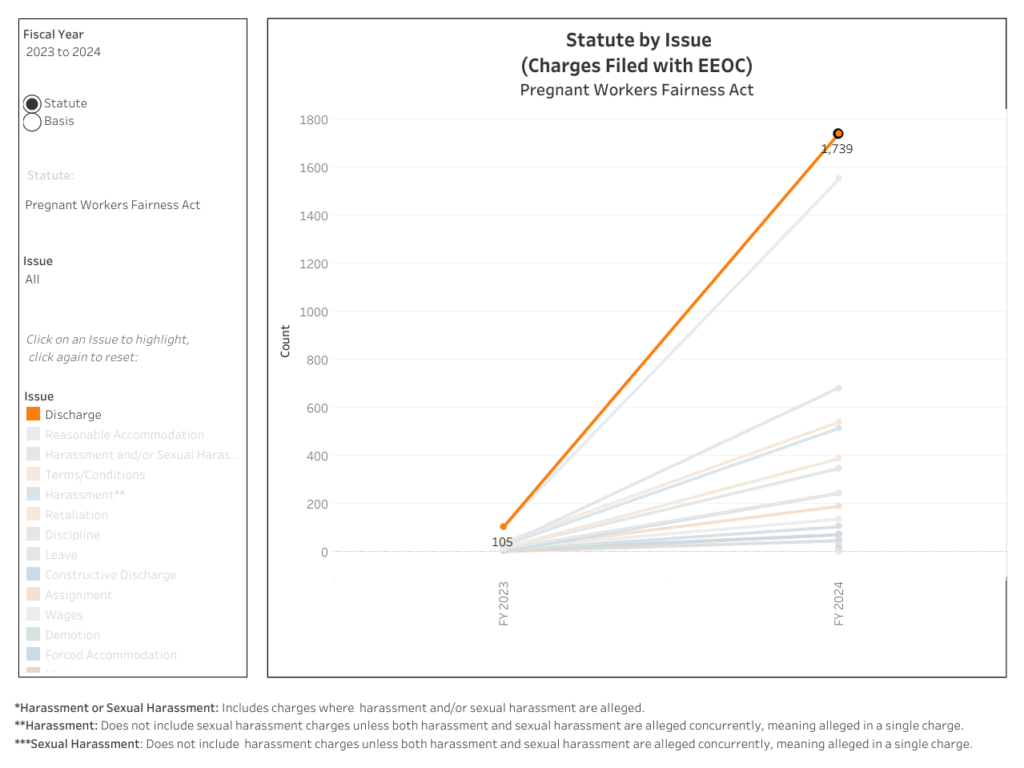
Pregnancy Discrimination, wrongful termination complaints filed 2024.

Filing EEOC Complaints

The EEOC complaint process provides several advantages:

  • No cost to file complaints
  • Investigation services by experienced federal investigators
  • Mediation opportunities for faster resolution
  • Right to sue letter enabling private litigation
  • Broad remedial authority including monetary damages and injunctive relief

Documentation Strategies

Effective documentation strengthens discrimination claims:

  • Written communications about accommodation requests and employer responses
  • Medical records supporting the need for accommodations
  • Performance evaluations demonstrating job competency
  • Witness statements from colleagues who observed discriminatory treatment
  • Company policies relevant to accommodation and discrimination issues

Legal Representation

Employment law attorneys provide crucial expertise in:

  • Evaluating claim strength and potential damages
  • Navigating complex procedures and filing requirements
  • Negotiating settlements that fully compensate for harm
  • Litigating cases when settlement negotiations fail
  • Protecting against retaliation during the legal process

Why Legal Consultation Matters

The complexities of pregnancy discrimination law require professional legal guidance to ensure proper protection of employee rights.

Case Evaluation

Experienced employment attorneys can:

  • Assess legal claims under applicable federal and state laws
  • Identify all potential defendants, including corporate entities and individuals
  • Calculate damage,s including economic losses and emotional harm
  • Evaluate settlement prospects and litigation risks
  • Develop a litigation strategy tailored to specific circumstances

Statute of Limitations

Federal discrimination laws impose strict time limits for filing complaints:

  • EEOC charges must typically be filed within 180 days (extended to 300 days in some jurisdictions)
  • Federal lawsuits generally require EEOC right-to-sue letters
  • State law claims may have different time limits and procedures
  • Documentation preservation becomes critical as time passes

Maximizing Recovery

Professional legal representation often results in:

  • Higher settlement amounts through effective negotiation
  • Comprehensive damage calculation including all available remedies
  • Stronger legal positions through proper case development
  • Better outcomes in complex multi-defendant cases
  • Protection from retaliation during the legal process

Seeking Justice for Pregnancy Discrimination

The Pita Pit lawsuit underscores the persistent challenges pregnant workers face in securing equal treatment and reasonable accommodations. When employers fail to meet their legal obligations, affected employees have powerful tools for seeking justice and preventing future discrimination.

Federal laws provide robust protections for pregnant workers, but these rights are only meaningful when properly enforced. The alleged conduct in the Pita Pit case—denying reasonable accommodations and using discriminatory language—represents exactly the type of behavior that pregnancy discrimination laws were designed to prevent.

Pregnancy Discrimination, Retaliation for Reporting Discrimination Settles for $73k

Pregnancy discrimination accommodations.

In a recent incident that has understandably sparked significant public concern, White Pine Senior Living, an assisted living facility in Minnesota, is facing serious allegations of pregnancy discrimination. This lawsuit brings to light the painful experience of a pregnant employee who, after receiving a well-deserved promotion, found herself in a distressing situation at work that ultimately forced her to resign. In an effort to address these serious issues, White Pine Senior Living has come to a settlement agreement of $73,000 and committed to implementing important changes to improve its workplace environment.

This troubling situation began when a dedicated female employee, celebrated for her hard work and promoted for her achievements, disclosed her pregnancy. Sadly, she was met not with support but with intimidation from her manager, who threatened her with demotion and subjected her to unwarranted scrutiny of her performance. When she bravely reported the discriminatory behavior, she faced retaliation through negative performance reviews that threatened her job security. The unjust pressure from management to hire a replacement only added to her distress, as they unfoundedly assumed that her pregnancy would affect her reliability.

Such treatment is not only deeply troubling but also a violation of Title VII of the Civil Rights Act of 1964, which protects employees from discrimination based on sex, including pregnancy. The Pregnancy Discrimination Act, an important amendment to Title VII, specifically aims to safeguard the rights of pregnant employees against such unjust treatment. Under these laws, pregnant employees must be treated fairly and equitably, and cannot face discrimination in any aspect of their employment, including hiring, promotions, job assignments, and benefits.

If you or someone you care about has experienced pregnancy discrimination, it’s crucial to take action promptly. Reporting these incidents is key to protecting your rights and preventing further harm. Victims of pregnancy discrimination can easily share their experiences through a dedicated reporting form. By speaking out, you not only advocate for your own rights but also contribute to creating a more equitable and supportive workplace for everyone.

Pregnant and Fired? The Deceptive Tactics Employers Use to Hide Discrimination

Pregnancy discrimination lawyers Beverly Hills Helmer Friedman LLP.

Imagine this scenario. You’re excelling at your job, hitting your performance targets, and receiving positive feedback from your boss. Then, one day, you announce you’re pregnant. Suddenly, subtle shifts start happening—projects reassigned, responsibilities reduced, and weekly one-on-ones morph into detailed critiques of your “sudden dip” in performance. Weeks later, you’re called into a meeting and handed a termination letter. The documented reason? Performance issues.

This chilling pattern is a reality for many pregnant workers today, and new cases are highlighting the deceptive lengths employers will go to justify such discriminatory actions. Below, we’ll dig into specific cases involving wrongful termination due to pregnancy, explore the legal measures in place, and outline what you, as a worker, should know.

Performance Pretext and the Role of Exculpatory Paper Trails

Pregnancy discrimination is not new. While the Pregnancy Discrimination Act of 1978 (PDA) explicitly prohibits employers from firing or discriminating against workers based on pregnancy, some employers bypass the law by masking their biases under the guise of performance-based terminations. Central to their strategy is the creation of exculpatory paper trails—detailed documentation designed to preemptively justify termination and absolve the employer of discrimination claims in court.

For pregnant workers, this translates to hyper-scrutinization and the sudden creation of a “record” to support claims of underperformance. These paper trails can paint a damning picture that often does not reflect the reality of the employee’s contributions, trying to make it difficult for workers to prove their termination was rooted in discrimination.

Case Spotlights

Mathew v. Santander Consumer USA, Inc.

Reena Mathew, a high-performing employee at Santander Consumer USA, claimed she was targeted after announcing her pregnancy. Her once-positive performance reviews allegedly became alarmingly negative. Santander created a paper trail documenting numerous “performance shortcomings” leading up to her termination. Mathew pushed back, asserting that this was contrived to mask the true motive—her pregnancy. The court sided with Mathew, uncovering glaring inconsistencies in the employer’s claims.

Wyatt v. Publix Super Markets, Inc.

A similar narrative unfolded in Wyatt v. Publix. When Tiffany Wyatt informed her supervisors of her pregnancy, the quality of her performance reviews plummeted inexplicably. Publix claimed declining performance justified her firing. Wyatt, however, provided evidence highlighting the timing of her termination, linking it directly to her due date; Publix fired her, purportedly for completing work without being logged in, although it allegedly never told her this was a problem and didn’t discipline similarly situated workers who weren’t pregnant, the complaint stated.

Zarak v. Netflix

Netflix, often celebrated for its workplace progressivism, faced scrutiny when employee Tania Zarak alleged pregnancy discrimination. She claimed that after disclosing her pregnancy, her team began excluding her from meetings and criticizing minor details of her work that had never been an issue before. Zarak was fired after her boss, Francisco Ramos, became aware of her plans to take maternity leave. According to Zarak, he first pressured her to resign, suggesting that they could negotiate some form of payment or insurance arrangement to facilitate her departure.

The case serves as a troubling example of how even companies with progressive reputations are not immune to engaging in discriminatory practices.

The Legal Lens on Pregnancy Discrimination

These cases underscore the critical role of the Pregnancy Discrimination Act (PDA) and other workplace protections embedded in Title VII of the Civil Rights Act, including the Pregnancy Workers Fairness Act, which requires employers to provide reasonable accommodations. While these laws are clear in their intent, proving a violation can sometimes seem a Herculean task.

Burden of Proof

In discrimination cases, employees must present strong evidence showing that adverse actions, like termination, were directly related to pregnancy. Employers often rely on their documentation—such as performance reviews—to argue that terminations were lawful. However, attorneys play a critical role in uncovering inconsistencies in this documentation to reveal the true reason for termination.

For instance, when an employee with a history of positive performance reviews is suddenly terminated for alleged performance issues, attorneys can investigate whether these justifications hold up. They look for signs of uneven application of performance standards, biased evaluation metrics, or abrupt changes in feedback patterns. By examining the timing, context, and motives behind these documents, attorneys can expose discrepancies that suggest the termination was actually related to pregnancy. This deeper analysis often uncovers a more troubling reality that contradicts the employer’s stated reasons for termination.

Remedies for Unlawful Termination

If an employee successfully proves discrimination, remedies can include:

  • Back Pay: Compensation for lost wages from the date of firing to the resolution of the case.
  • Reinstatement: Returning to their position (if feasible).
  • Compensatory and Punitive Damages: For emotional distress and to punish unlawful conduct.

Some states also have additional worker protection laws that grant expanded remedies or impose stricter penalties on violators.

Empowering Pregnant Workers

The reality of pregnancy discrimination is daunting, but workers aren’t powerless. Here’s how you can protect yourself if you feel targeted at your workplace:

  1. Document Everything

Keep thorough records of interactions with your employer, including emails, performance reviews, and informal feedback. This can help build your case if discrimination occurs.

  1. Understand Your Rights

Familiarize yourself with the Pregnancy Discrimination Act of 1978 and related state laws to ensure you know what protections you’re entitled to.

  1. Seek Legal Advice

Don’t wait until things escalate. Consulting an employment attorney early can help you understand your options and prepare a strategic response to discriminatory treatment.

Concluding Thoughts

The systemic nature of pregnancy discrimination reflects broader inequities in the workplace. While many companies hide behind performance claims, exposing these lies and ensuring accountability is possible—and crucial for fostering a just labor landscape.

If you’re facing termination or other adverse actions at work after announcing your pregnancy, know that you’re not alone. Seek support, lean on credible legal resources, and consider shining a light on the injustices you’re experiencing. Empowering pregnant workers is key to dismantling these pretexts and building a fairer workplace for all.

Kurt Bluemel Accused of Pregnancy Discrimination: A Closer Look at the PWFA

Pregnancy discrimination lawyers - protecting pregnant employees from discrimination.

Kurt Bluemel Accused of Pregnancy Discrimination: A Closer Look at the Pregnant Workers Fairness Act

A recently filed lawsuit against Kurt Bluemel, a Baltimore County-based commercial nursery, underscores the critical importance of enforcing pregnancy discrimination laws. The complaint alleges that the company failed to accommodate a pregnant employee seeking to return to work after maternity leave. Upon her attempt to resume her position, she was informed that no work was available despite the company hiring new, non-pregnant employees both before and after her return attempt. Such actions, if proven, directly violate the Pregnant Workers Fairness Act (PWFA) and Title VII of the Civil Rights Act of 1964. This case raises serious concerns about the commitment of businesses to upholding workers’ rights, particularly those of pregnant employees.

The Pregnant Workers Fairness Act: A Timely Intervention

Enacted to protect the rights of soon-to-be-mothers in the workplace, the PWFA requires employers, agencies, unions, and employees to provide reasonable accommodations to qualified employees experiencing limitations related to pregnancy or childbirth. This is unless such accommodations would lead to undue hardship to the business.

The enforcement of the PWFA mirrors the provisions of Title VII and related acts, permitting damages but with limitations if the employer can prove a good faith effort to provide reasonable accommodations. The Equal Employment Opportunity Commission (EEOC) has been charged with the task of creating regulations and has made improvements to charge processing.

Decoding the Pregnant Workers Fairness Act

The PWFA is comprehensive in its approach to safeguarding pregnant employees. It defines “known limitation” as any physical or mental condition related to pregnancy or childbirth communicated to the employer. Even conditions that may seem minor, episodic, or related to general health, if related to pregnancy or childbirth, must be acknowledged by the employer.

The Act provides a framework to support reasonable accommodations for pregnant employees, from temporary suspension of certain functions, job restructuring, to assignment in a light or modified duty program. Employers are required to find the best fit that does not result in undue hardship.

The Importance of Career Continuity for Women

The devastating reality is that women often face significant hurdles in maintaining their careers while pregnant or raising families. This not only stunts career growth but also disrupts financial stability and well-being. It is absolutely critical that businesses take steps to accommodate pregnant employees’ needs, ensuring they can effectively balance their professional responsibilities and personal health.

A Final Word – Know Your Rights

If you have personally experienced pregnancy-related discrimination or retaliation, it’s paramount that you seek assistance. Contact an experienced employment law attorney who can help assess your situation and guide you through the legal recourse available. The law is there to protect you – you don’t have to face discrimination in silence.

Pregnancy Discrimination: Real Stories, Real Change Needed

Pregnancy discrimination lawyers Beverly Hills Helmer Friedman LLP.

In a nation that upholds equality as a core value, the fight against pregnancy discrimination remains a significant challenge. Recent high-profile cases, notably involving Frontier Airlines, highlight the ongoing struggles faced by pregnant and breastfeeding women in the workplace.

Frontier Airlines became embroiled in two substantial lawsuits filed by the American Civil Liberties Union (ACLU) and local partners in Denver on behalf of eight pilots and flight attendants. The plaintiffs claimed that the airline penalized pregnancy-related absences and denied crucial accommodations for pregnant and breastfeeding employees, including prohibiting breast pumping while on duty. These discriminatory practices inflicted considerable harm on these women, affecting both their professional lives and personal well-being. Many were forced to take unpaid leave during their pregnancies and had their requests for breast pumping accommodations denied upon returning to work.

Fortunately, U.S. laws offer some protections against such discrimination. The Pregnancy Discrimination Act of 1978, an amendment to the Civil Rights Act of 1964, prohibits employers from discriminating based on pregnancy, childbirth, or related medical conditions. Additionally, the Family and Medical Leave Act (FMLA) allows eligible employees to take unpaid, job-protected leave for specific family and medical reasons, including pregnancy and childbirth.

Nonetheless, the struggle persists. The lawsuits against Frontier Airlines culminated in a settlement in the Freyer case, resulting in significant policy changes aimed at better accommodating pregnant and nursing employees. However, these developments underscore the need for further improvements and highlight the urgent necessity for progress on both corporate and legislative fronts.

As we pursue greater equality in the workplace, we must remember individuals like Erica Hayes, who made an unimaginable sacrifice while trying to maintain her income during pregnancy. Erica experienced a miscarriage after imploring her supervisors for lighter lifting duties while working at a Verizon warehouse.

In another instance, Dallas Barber and Stylist College, Inc., a barber shop and school in Dallas, found themselves the defendants in a pregnancy discrimination lawsuit when a pregnant applicant applied for a hair braider position and performed a skills test successfully. Despite her qualifications, the owner informed her that they already had a pregnant employee and did not wish to hire another.

These experiences serve as a poignant reminder of the real and devastating consequences of pregnancy discrimination. They are not isolated incidents but rather reflect systemic issues that demand our attention and action. Together, we can work to eradicate pregnancy discrimination, foster workplaces that respect and support all employees, and build a fairer society for future generations.

Bako Pays $50,000 Pregnancy Discrimination and Retaliation

Pregnancy discrimination lawyers Beverly Hills Helmer Friedman LLP.

Pregnancy discrimination laws provide robust protection for employees, defending them against termination due to pregnancy-related complications. This legal safety net was highlighted in the recent case with Bakotic Pathology Associates, LLC (Bako), which was involved in a lawsuit over allegations of pregnancy discrimination and retaliation. The lawsuit, presented by the U.S. Equal Employment Opportunity Commission (EEOC), asserted that Bako unfairly treated an employee suffering from pregnancy-related ailments.

Bako terminated the employee during her authorized medical leave and while she was availing short-term disability benefits, following her reports of pregnancy discrimination. This alleged behavior contravenes Title VII of the Civil Rights Act of 1964 that explicitly forbids sex-based discrimination and retaliation for participation in protected activities.

As a result of the lawsuit, Bako agreed to a settlement involving a $50,000 payment and the implementation of remedies. Additionally, Bako is now obligated to provide its employees with specialized training on Title VII, share internal complaint procedures and Title VII policies with the workforce, and report any pregnancy discrimination complaints to the EEOC.

Specific situations that would constitute pregnancy discrimination and/or retaliation include:

  • An employer refusing to accommodate reasonable requests made for pregnancy-related conditions, especially when such accommodations are provided for other employees with different medical conditions.
  • Openly demoting, reducing the hours, or offering lower pay to an employee upon learning of her pregnancy, under the guise of unrelated performance issues.
  • Dismissal of a pregnant employee using the pretext of organizational restructuring, when in reality, the position remains open or is quickly filled by someone not pregnant.
  • Subjecting a pregnant employee to frequent, unwarranted disciplinary actions following the announcement of her pregnancy, suggesting a motive grounded in discrimination rather than actual performance issues.
  • Failing to reinstate an employee to her original or equivalent position after returning from maternity leave, which is guaranteed under certain conditions by the Family and Medical Leave Act (FMLA).
  • Retaliating against an employee for filing a complaint regarding pregnancy discrimination or for participating in an investigation about such allegations, often seen through sudden negative performance reviews or exclusion from meetings and company events.

For more information on pregnancy discrimination, visit the www.HelmerFriedman.com website or reach out through 1-310-396-7714 or info@HelmerFriedman.com. Ensure your rights are protected.