

Tesla’s Racial Discrimination Trial: What the Evidence Reveals

Tesla must pay $137 million to a Black employee who sued for racial discrimination.

Tesla’s Racial Discrimination Created Toxic Environment

A California courtroom is now the stage for one of the most consequential workplace discrimination trials in recent memory. At the heart of the case: whether Tesla’s Fremont factory harbored a systemic pattern of racial harassment against Black employees, or whether the incidents described were isolated acts by a handful of bad actors. The distinction matters enormously, both for the employees who say they endured years of abuse and for the broader question of how much responsibility corporations bear for the cultures they create.

This trial isn’t just about one factory or one company. It’s testing whether courts will hold corporate leadership accountable when a toxic environment isn’t the product of a few rogue employees, but appears to be tolerated—or even sanctioned—from the top down. For anyone who has experienced discrimination or harassment at work, the outcome could reshape what accountability looks like.

The Evidence: A Pattern of Harassment

The California Civil Rights Department’s case rests on a mountain of documentation gathered over nearly a decade. According to a class-action lawsuit validated by a California Superior Court, the claims stem from approximately 500 declarations describing racial harassment at Tesla’s Fremont factory spanning almost eight years.

The specifics are difficult to read. Supervisors and coworkers reportedly used racial slurs and derogatory language, including non-Black supervisors calling Black workers “porch monkeys” and “slaves.” on a regular basis. Racist graffiti, including swastikas and drawings of nooses, appeared throughout factory spaces. Over 200 plaintiffs working at the Fremont facility reported hearing racial slurs directly, and roughly two-thirds of those who provided sworn statements said they personally witnessed anti-Black graffiti.

This wasn’t a single incident that spiraled out of control. It was, according to the evidence presented, a sustained environment that persisted despite repeated complaints.

Systemic Inequality at Tesla

Beyond the harassment allegations, the case points to structural disparities that suggest the problem ran deeper than individual misconduct. Black employees make up roughly 10% of Tesla’s U.S. workforce but hold only 4% of leadership positions. The pay gap tells a similar story: Black employees reportedly earned approximately $1,533 less per month than their white counterparts.

Tesla has had a complaint system in place since 2017. But according to the lawsuit, the company failed to take immediate and appropriate corrective action when employees came forward. Perhaps more troubling, several plaintiffs allege a pattern of retaliation against those who reported harassment—meaning the employees who tried to fix the problem often paid the highest price for speaking up.

Management’s Response: Inadequate and Dismissive

If the graffiti and slurs represent the disease, Tesla’s leadership response may represent the diagnosis. In 2017, as racial complaints mounted at the Fremont plant, Elon Musk reportedly sent an email to all employees. Rather than issuing a strict zero-tolerance directive, he told workers that employees from underrepresented groups should be understanding of unintentional slights and needed to be “thick-skinned,” accepting an apology if someone was “being a huge jerk.”

That message, according to testimony, set the tone for everything that followed. Instead of disciplining harassers, some managers reportedly issued formal write-ups against the victims who reported them. One witness testified that after reporting a coworker who threatened him and used a racial slur, he received a write-up rather than his coworker, and was subsequently passed over for more than 100 internal promotions.

The allegations extend into the legal proceedings themselves. On the first day of trial, the state reportedly requested an emergency protective order after a witness revealed that an in-house Tesla lawyer had contacted him days before his scheduled testimony, allegedly misrepresenting himself and attempting to steer the witness toward favorable statements about Tesla’s culture. A former regional security manager also testified that his supervisor instructed him to warn a newly hired Black Marine veteran that he would be called racial slurs, implying that tolerating abuse was simply a condition of the job.

Legal Framework and Broader Context

This case doesn’t exist in a vacuum. It’s built on decades of employment law designed specifically to prevent this kind of conduct. Title VII of the Civil Rights Act of 1964 prohibits employment discrimination based on race, color, religion, sex, or national origin, covering everything from hiring decisions to workplace harassment. California’s Fair Employment and Housing Act extends similar protections at the state level, applying to businesses with as few as five employees.

The numbers suggest this problem is far from shrinking. According to the EEOC, harassment complainants filed 35,774 claims in 2024, representing roughly a 32% increase from 2022. Retaliation cases now account for approximately 55.8% of all charges filed with the agency.

Tesla is far from the only major company to face reckoning over workplace discrimination. Google settled a pay discrimination lawsuit for $28 million after a leaked internal spreadsheet revealed systematic disparities affecting Hispanic, Latinx, Indigenous, and other employees. Activision Blizzard agreed to pay approximately $54.8 million to resolve claims of unequal pay and sex-based discrimination. These settlements share a common thread: clear evidence of systemic disparities, followed by real financial consequences and mandated policy changes.

What’s at Stake

The remedies being sought in this case go well beyond a simple fine. The California Civil Rights Department is asking the court to order back pay reflecting the wage gap, compensatory damages for emotional distress, and punitive damages intended to address the alleged suppression of internal compliance findings.

According to Alameda County Superior Court Judge Noel Wise, the case will help establish common facts that could simplify individual claims going forward, since hundreds or potentially thousands of workers may be entitled to seek damages from Tesla depending on the outcome.

The central legal question the court must answer is deceptively simple: was this the result of individual bad actors acting outside company policy, or was it a pattern that leadership knew about and tolerated? The answer will determine not just the size of any financial award, but the nature of the remedy—whether it’s simply monetary, or whether it requires structural changes to how Tesla identifies and addresses complaints going forward.

A Test for Corporate Accountability

Regardless of how Judge Peter Borkon ultimately rules, this trial has already accomplished something important: it has forced a public reckoning with how corporate culture is built, sustained, and defended in the courtroom. Whether Tesla’s environment reflected individual misconduct or systemic tolerance, the case sets a marker for how seriously companies must take internal complaints of race-based harassment.

For workers who have experienced discrimination, harassment, or retaliation after reporting misconduct, cases like this one demonstrate that documentation and persistence matter. Patterns of behavior, however difficult to prove, can eventually surface in ways that demand accountability.

If you believe you have experienced race discrimination, harassment, or retaliation in your workplace, you don’t have to navigate that alone. Helmer Friedman LLP offers confidential consultations to help you understand your legal options and determine the strongest path forward for your specific situation.

This blog post is for informational purposes only and does not constitute legal advice. The allegations described above reflect claims made in ongoing litigation and are not yet the subject of a final court judgment. Facts and case outcomes may change as proceedings continue. For guidance specific to your situation, please consult a qualified employment attorney.
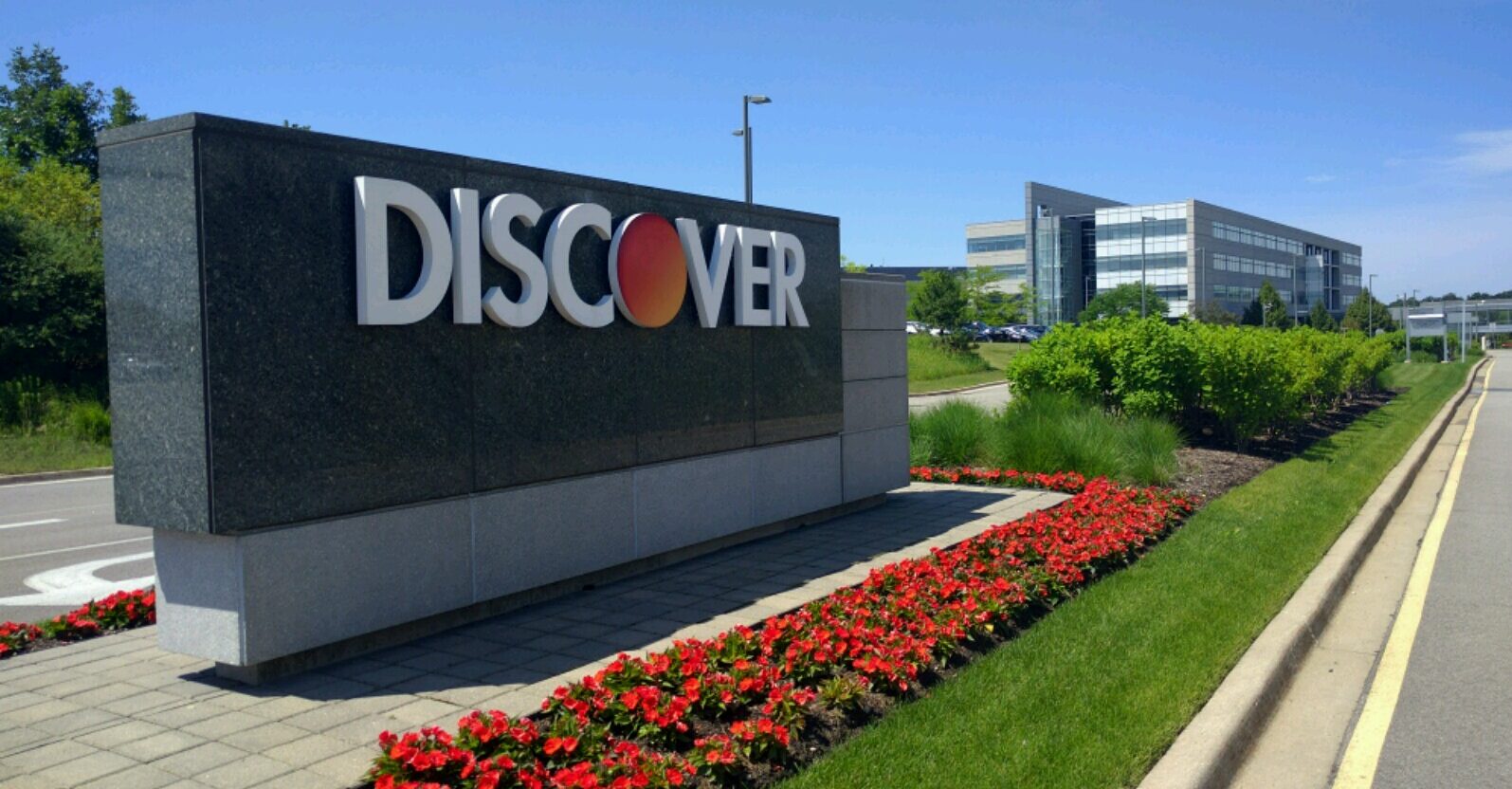
Discover Faces $7M Gender and Age Discrimination Lawsuit

Discover office Southern California.

Discover Executive Files Major Gender and Age Discrimination Lawsuit

A high-profile discrimination lawsuit has shaken Discover Financial Services as former executive Diane Offereins alleges the company made her a scapegoat for regulatory issues while revoking over $7 million in stock awards. The case, filed in U.S. District Court for the Northern District of Illinois, centers on claims of gender discrimination and age discrimination that highlight broader corporate accountability issues.

Offereins’ lawsuit comes amid Discover’s public disclosure in July 2023 that it had incorrectly classified some individuals’ credit cards as “commercial” beginning around mid-2007—two years before she even joined the company’s payment network division. The timing raises critical questions about fair treatment and corporate responsibility when regulatory problems emerge.

The case has already survived Discover’s attempt to dismiss the charges, with U.S. District Judge Joan Gottschall ruling that Offereins “plausibly alleged violations of U.S. civil rights law and equal pay provisions.” This decision allows the lawsuit to move forward, potentially setting important precedents for executive treatment and discrimination in corporate America.

A Distinguished Career Cut Short

Diane Offereins built an impressive 25-year career at Discover Financial Services, a digital banking and payment services company. Recruited in 1998 to serve as Chief Information Officer, she demonstrated exceptional leadership that earned her increasing responsibilities within the organization.

After serving as CIO until 2009, Offereins transitioned into the role of Executive Vice President and President of Payment Services, where she led Discover’s payments network until her retirement in June 2023. Her long tenure and senior position made her one of the company’s most experienced executives, with deep institutional knowledge spanning decades of corporate evolution.

The trajectory of her career—from CIO to heading the payments division—reflected Discover’s confidence in her abilities and leadership. This background makes the circumstances surrounding her departure and the subsequent revocation of her stock awards particularly striking.

The Heart of the Allegations

Offereins’ lawsuit presents serious claims of discriminatory treatment, alleging violations of multiple federal and state laws, including Title VII of the Civil Rights Act, the Equal Pay Act, and the Age Discrimination in Employment Act. The core allegation centers on pay discrimination and unfair treatment based on her gender and age.

The lawsuit describes how Discover initiated a long-running internal investigation into potential misclassification of certain credit cards that charged merchants higher interchange fees. According to court documents, this misclassification issue was “well-known within the Company and had been actively discussed since at least 2017.”

What makes Offereins’ case particularly compelling is her assertion that she became an unfair target for problems that predated her involvement. The credit card misclassification began around mid-2007, yet she didn’t join the payment network side of the business until 2009. Despite this timeline, she alleges that Discover used the investigation findings to justify canceling her unvested stock awards under claims of “misconduct.”

The $7 Million Stock Revocation

The most dramatic aspect of the case involves Discover’s decision to cancel Offereins’ unvested stock awards worth more than $7 million. The timing of this action proved particularly damaging—occurring six months after her retirement and on the night before her shares were due to vest.

Court documents reveal a calculated sequence of events. Offereins retired in June 2023, was interviewed by outside counsel days later, and then received notification in January 2024 that her unvested awards were being canceled. The company claimed she had engaged in “willful or reckless violation of the company’s risk policies” based on findings from the internal investigation.

Perhaps most significantly, Offereins alleges she was the only woman and only retired executive committee member to lose equity as a result of the investigation. According to her lawsuit, male executives who were “actually responsible for the card classification issue emerged relatively unscathed” and “managed to reap their benefits.”

Legal Proceedings Gain Momentum

Offereins took decisive legal action, filing charges with both the Equal Employment Opportunity Commission (EEOC) and the Illinois Department of Human Rights (IDHR) in June 2024. The EEOC quickly issued her a Notice of Right to Sue, enabling her federal lawsuit.

Discover attempted to dismiss the case, arguing in court filings that it “championed her for empowering women” and that she “does not — and cannot — allege that a similarly situated male was treated differently.” However, Judge Gottschall rejected this defense strategy.

The judge’s ruling contained particularly damaging language for Discover, stating that “Offereins plausibly pleads that Discover viewed her as a convenient scapegoat because, as a woman who had reached retirement age, it believed it was considerably harder for her to ‘fight back’ than it would have been for her younger, male colleagues.”

Sean Hecker, Offereins’ attorney, welcomed the court’s decision, saying they were pleased to see “this important matter move forward.” The ruling ensures the case will proceed to discovery, where internal company communications and decision-making processes may be scrutinized.

Broader Implications for Corporate Accountability

This lawsuit highlights critical issues surrounding age discrimination and gender discrimination in corporate America, particularly at the executive level. The case demonstrates how companies might use internal investigations as cover for discriminatory actions, raising questions about due process and fair treatment.

The legal challenges in proving discrimination cases often center on demonstrating disparate treatment—showing that similarly situated individuals of different demographics were treated more favorably. Offereins’ allegations about being the sole woman and retiree to lose equity could provide compelling evidence if substantiated through discovery.

Corporate governance experts note that the timing of Discover’s actions—revoking awards just before vesting—appears calculated to maximize financial harm while minimizing the company’s exposure. Such tactics may backfire if they’re perceived as retaliatory or discriminatory by courts and juries.

The case also raises broader questions about accountability when regulatory issues span multiple executives and time periods. How companies allocate blame and consequences during investigations can reveal underlying biases and discrimination patterns.

Fighting Back Against Corporate Discrimination

The Offereins case represents more than one executive’s fight for fair treatment—it embodies the ongoing struggle against systemic discrimination in corporate America. When companies use their power to target vulnerable employees while protecting favored executives, they undermine principles of equal treatment and due process.

For individuals facing similar discrimination, this case highlights the importance of documenting unfair treatment and seeking the counsel of experienced lawyers. Employment discrimination cases require sophisticated legal strategies and a deep understanding of federal and state civil rights laws.

The outcome of this lawsuit could influence how courts evaluate discrimination claims involving executive compensation and retirement benefits. A favorable ruling for Offereins might encourage other victims of discrimination to challenge unfair corporate actions.

Whether you’re experiencing workplace discrimination or retaliation, understanding your legal rights remains crucial. Corporate accountability depends on individuals willing to stand up against unfair treatment, even when facing powerful institutional opponents.

Stay informed about important legal developments that could affect your rights. Subscribe now for regular updates on discrimination law and corporate accountability cases.